about
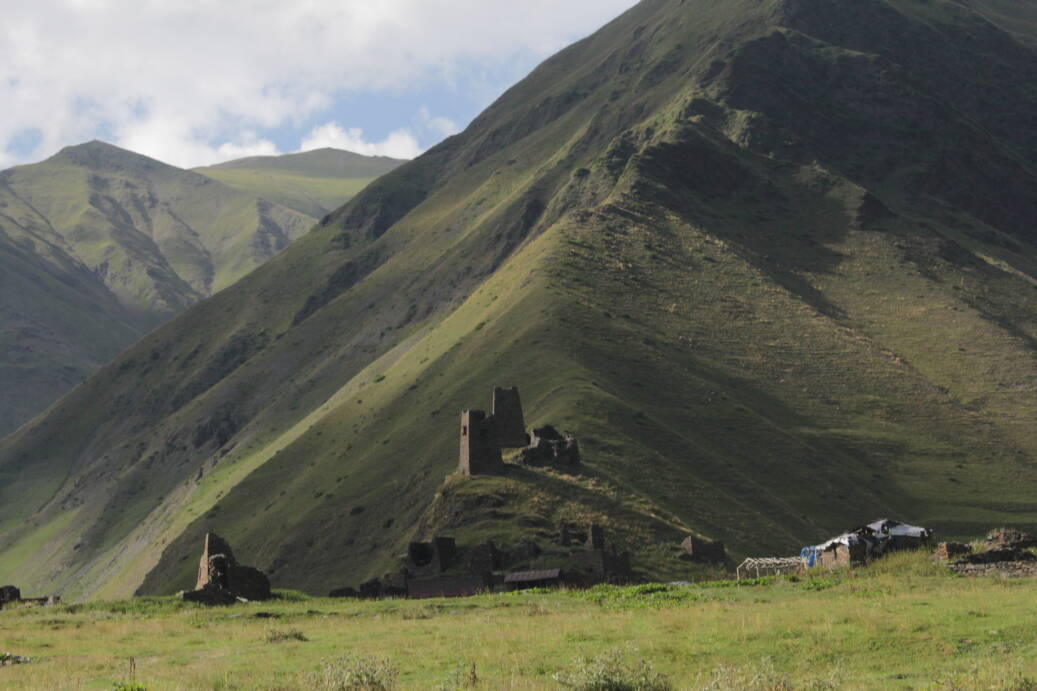
Tush, Tsova-Tush, Batsbi, Bats
is a Nakh-Daghestanian language spoken by a small group of speakers in the Tusheti region of northeastern Georgia (village Zemo Alvani). Tush is especially well known among linguists for its complex ergative alignment, which manifests in both its case-marking and verb agreement systems. With fewer than 500 speakers today, Tush is considered severely endangered, which makes its documentation urgent.
Contributors
Diana Kakashvili
conception, instructions, recordings, transcriptions, translations, analyses
Ivane Javakishvili Tbilisi State University, University of Göttingen
Language
Genetic affiliation: Nakh-Daghestanian/East Caucasian, Nakh
Place: Georgia
Language Code: bbl
Population: below 500
Endangerment: severely endangered (Endangered Languages Project)
data
Place and Time
data recorded in Zemo Alvani13–19 March 2022
Speakers
- women: 12
- men: 4
age
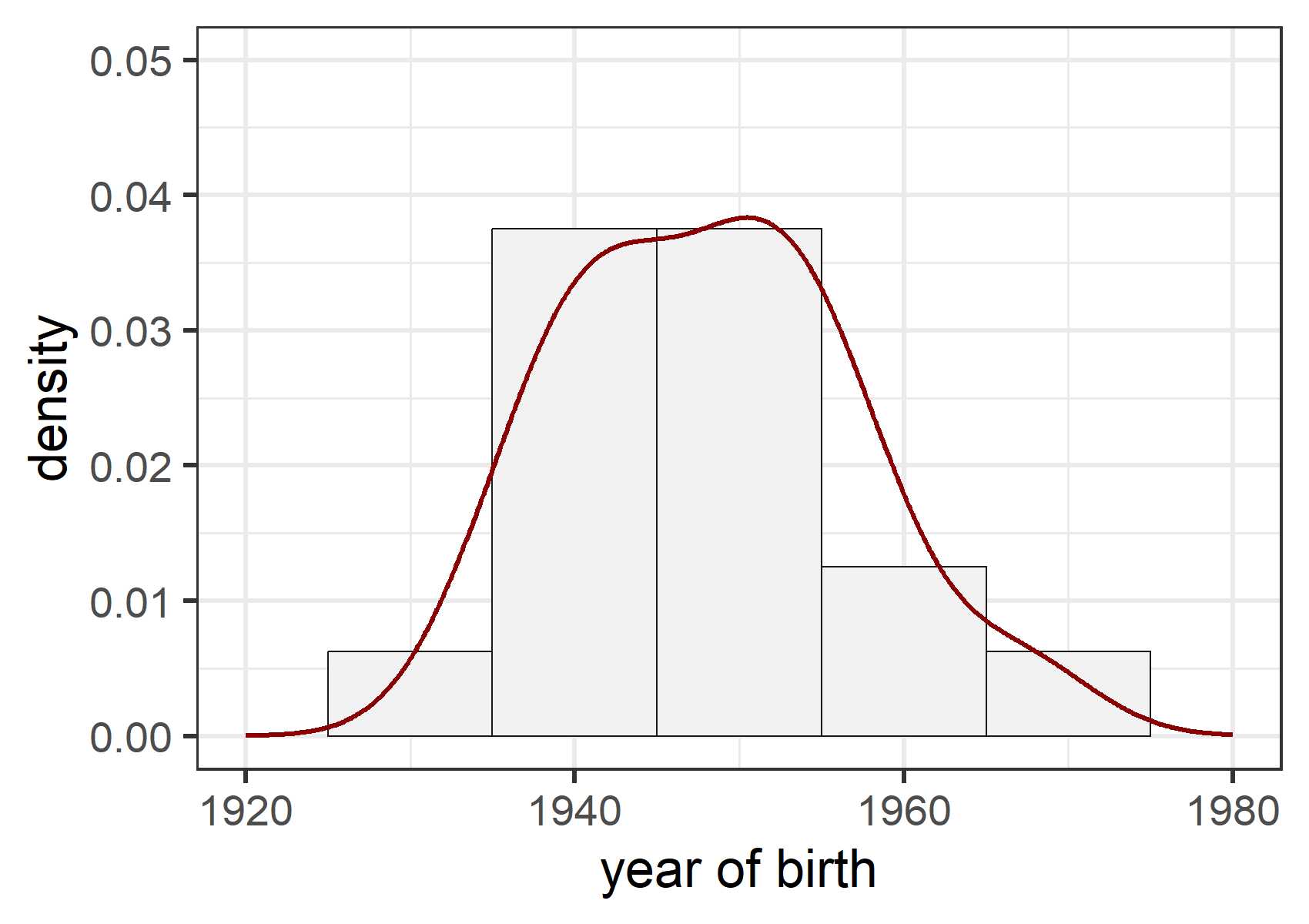
range: 1935-1967
average: 1948,25
median: 1949
language use
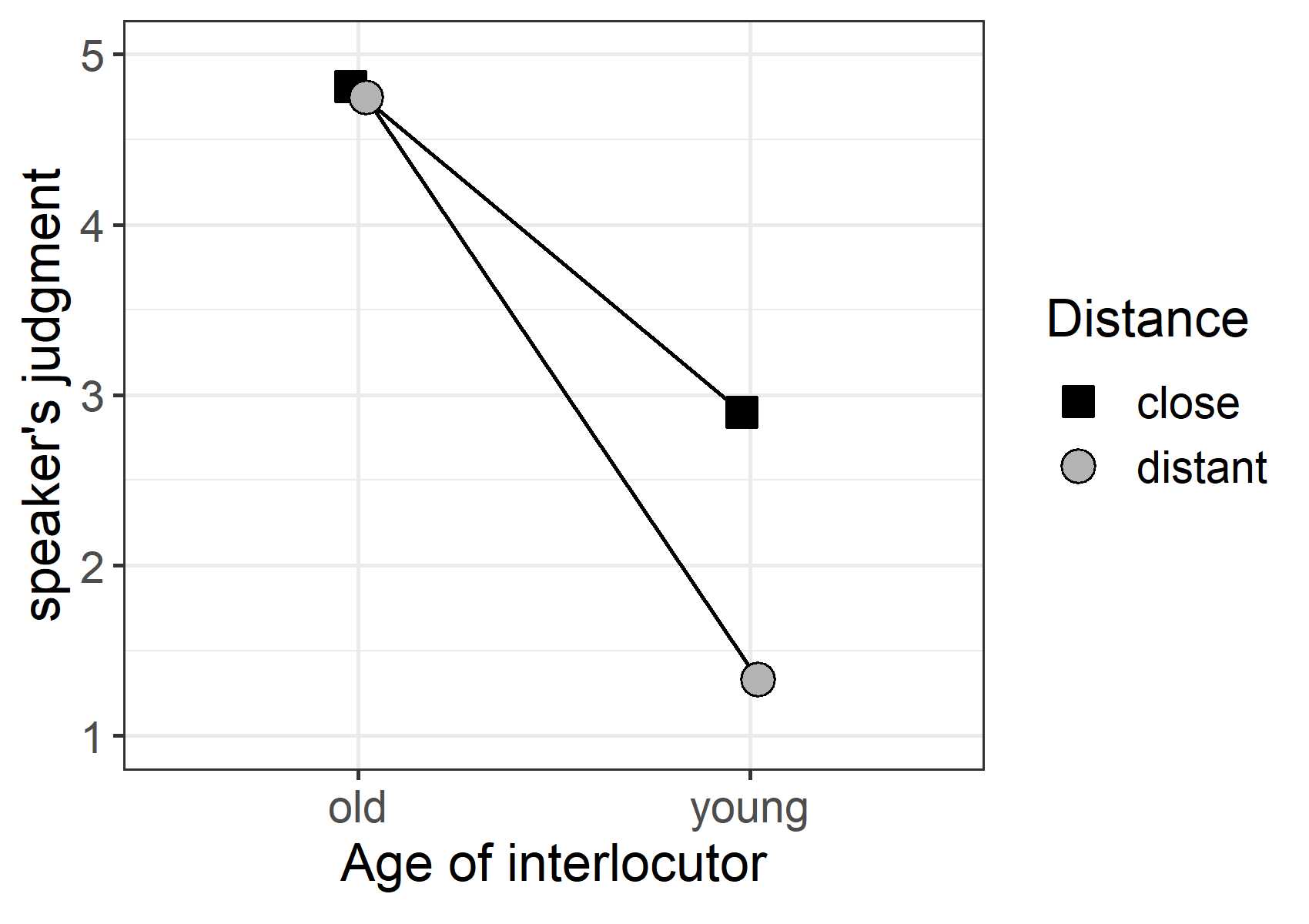
How often do you use Batsbi
with your parents/children/
neighbors/neighbors' children?
Instructions
The speakers produced the narratives as an answer to the following instructions. Instructions were presented in Georgian.
| Abbreviation | Text | Instruction |
|---|---|---|
| AN | Ancestor Story | Please tell me how do you imagine that your ancestors lived. It is not a problem if you are not sure about the details. Just tell me the story of your ancestors as far as you know it. If you do not know anything, please tell me how do you imagine that these people were living. |
| AC | Activity Description | Please tell me how you are making a K’ot’ori. Do not worry if there are some details that you do not know, just give me a clear description, such that another person can do the same. |
| CD | Comparative Description | Please tell me how you perceive the major differences between Georgian and Tsova-Tush language. |
| EV | Event Description | Please tell me how did you enjoy the last Dadaloba: what did you prepare for the feast, who was there, what did you do, what did you think, what did you feel, what happened. |
| PA | Path Description | Please describe the path to go from Zemo Alvani to Tsovata (or Tbatana) to me. Please give exact descriptions, so that we can recognize the path that we have to follow (by telling me about all the important places on the way). |
Recordings
- Recordings took generally place in quite places (not laboratory conditions),
- with a ZOOM H6 recorder, interchangeable clip-on microphones, at a sampling frequency of 96000 kHz, audio files were saved in wav format.
- Total soundfiles: 80;
- Total duration: 138 min.
| speaker | AC | AN | CD | EV | PA |
|---|---|---|---|---|---|
| 01 | 40 | 31 | 24 | 106 | 276 |
| 02 | 68 | 95 | 25 | 111 | 62 |
| 03 | 44 | 72 | 53 | 144 | 90 |
| 04 | 175 | 95 | 79 | 99 | 105 |
| 05 | 60 | 80 | 80 | 158 | 334 |
| 06 | 62 | 93 | 40 | 80 | 62 |
| 07 | 99 | 269 | 68 | 337 | 203 |
| 08 | 73 | 128 | 74 | 220 | 159 |
| 09 | 126 | 164 | 128 | 220 | 91 |
| 10 | 100 | 101 | 50 | 53 | 96 |
| 11 | 137 | 187 | 136 | 274 | 195 |
| 12 | 98 | 214 | 184 | 77 | 94 |
| 13 | 126 | 125 | 99 | 191 | 91 |
| 14 | 64 | 92 | 54 | 117 | 42 |
| 15 | 99 | 114 | 68 | 233 | 220 |
| 16 | 111 | 124 | 157 | 175 | 225 |
File names
- Example: BBL-TXT-AN-00000-01
- BBL- language code: BBL=“Batsbi"
- TXT- subcollection code: TXT=“Texts"
- AN- instruction code; 5 options: AN="Ancestors", AC="Activity", CD="Comparison", EV="Event", PA="Path" (see instructions above)
- 00000- does not play a role in this subcollection
- 01 Speaker identifier, ranges from 01 to 16
Annotations
Layers
The annotation layers of the corpus files follow the conventions used in ELAN. "A_" stands for the speaker, the further layers are associated with phrase/word/morph intervals, and either contain text (txt) in Tush (bbl) or translations (gls)/part of speech (pos) in English (en). Precisely:
| layer | speaker | level | content | language |
|---|---|---|---|---|
| interlinear-txt-title | - | text | title | - |
| A_phrase-segnum | A | time-aligned interval | number | - |
| A_phrase-txt-bbl | A | sentence | transcription | Batsbi |
| A_phrase-gls-en | A | sentence | translation | English |
| A_word-txt-bbl | A | word | transcription | Batsbi |
| A_word-pos-en | A | word | part of speech | English |
| A_morph-txt-bbl | A | morpheme | transcription | Batsbi |
| A_morph-msa-en | A | morpheme | part-of-speech | English |
| A_morph-type-en | A | morpheme | type | English |
| A_morph-gls-en | A | morpheme | translation | English |
Transcriptions
| local orthography (Georgian alphabet) | romanized orthography | IPA |
|---|---|---|
| ა | a | a |
| აჼ | aⁿ | ã |
| აა | ā | aː |
| ბ | b | b |
| გ | g | g |
| დ | d | d |
| ე | e | e |
| ეჼ | ẽ | ẽ |
| ე̆ | ě | ě |
| ვ | v | v |
| ზ | z | z |
| თ | t | tʰ |
| თთ | tt | tʰː |
| ი | i | i |
| იჼ | ĩ | ĩ |
| ი̆ | ǐ | ǐ |
| ჲ | j | j |
| კ | ḳ | kʼ |
| ლ | l | l |
| ლლ | ll | lː |
| ლ‘ | ɬ | ɬ |
| მ | m | m |
| ნ | n | n |
| ო | o | o |
| ოჼ | õ | õ |
| ო̆ | ǒ | ǒ |
| პ | ṗ | pʼ |
| ჟ | ž | ʒ |
| რ | r | r |
| ს | s | s |
| სს | ss | sː |
| ტ | ṭ | tʼ |
| ტტ | ṭṭ | tʼː |
| უ | u | u |
| უჼ | ũ | ũ |
| უ̆ | ǔ | ǔ |
| ფ | p | pʰ |
| ქ | k | kʰ |
| ღ | ğ | ʁ |
| ყ | q̇ | qʼ |
| ყყ | q̇q̇ | qʼː |
| შ | š | ʃ |
| ჩ | č | tʃʰ |
| ც | c | ts |
| ძ | ʒ | dz |
| წ | c̣ | tsʼ |
| ჭ | č̣ | tʃʼ |
| ხ | x | x |
| ხხ | xx | xː |
| ჴ | q | qʰ |
| ჴჴ | qʰː | |
| ჯ | ǯ | dʒ |
| ჰ | h | h |
| ჰ̣ | ћ | ћ |
| ჵ | ɦ | ɦ |
| ჺ | Ɂ | ʔ |
| ჸ | ʕ | ʕ |
Categories
The abbreviations for glosses follow the Leipzig Glossing Rules.
Noun classes are annotated as lexical property of nouns or as a property of the agreement prefixes.
| Category | Value | Abbreviation |
|---|---|---|
| case | absolutive | ABS |
| case | adessive | ADESS |
| case | adverbial | ADV |
| case | allative | ALL |
| case | contact | CONT |
| case | dative | DAT |
| case | ergative | ERG |
| case | genitive | GEN |
| case | illative | ILL |
| case | instrumental | INSTR |
| case | locative | LOC |
| case | nominative | NOM |
| case | oblique stem | OBL |
| case | vocative | VOC |
| pronominal | first | 1 |
| pronominal | second | 2 |
| pronominal | third | 3 |
| pronominal | inclusive | INCL |
| pronominal | exclusive | EXCL |
| pronominal | possessive | POSS |
| pronominal | reflexive | REFL |
| pronominal | medial (demonstrative) | MED |
| pronominal | proximal (demonstrative) | PROX |
| pronominal | distal (demonstrative) | DISTAL |
| pronominal | indefinite | INDF |
| noun class | singular V, plural B (masculine) | VB |
| noun class | singular J, plural D (feminine) | JD |
| noun class | singular B, plural B | BB |
| noun class | singular D, plural D | DD |
| noun class | singular J, plural J | JJ |
| noun class | singular B, plural D | BD |
| noun class | singular B, plural J | BJ |
| noun class | singular D, plural J | DJ |
| number | singular | SG |
| number | plural | PL |
| number | associative (plural) | ASC |
| adjectival | comparative | COMP |
| adjectival | superlative | SUP |
| adjectival | intensifier | INTS |
| adjectival | multiplicative | MULT |
| adjectival | privative | PRIV |
| adjectival | distributive | DISTR |
| tense/aspect | aorist | AOR |
| tense/aspect | non-past | NPST |
| tense/aspect | past | PST |
| tense/aspect | future | FUT |
| tense/aspect | imperfective | IPFV |
| tense/aspect | perfective | PFV |
| tense/aspect | habitual | HAB |
| tense/aspect | future | FUT |
| tense/aspect | present | PRS |
| verbal | subjunctive | SUBJ |
| verbal | imperative | IMP |
| verbal | polite (imperative) | POL |
| verbal | auxiliary | AUX |
| verbal | causative | CAUS |
| verbal | non-witnessed | NW |
| verbal | object | O |
| verbal | subject | S |
| verbal | optative | OPT |
| verbal | preverb | PV |
| verbal | infinitive | INF |
| verbal | conditional | COND |
| verbal | converb | CVB |
| verbal | verbal noun | VN |
| verbal | participle | PTCP |
| derivation | nominalizer | NMLZ |
| derivation | adverbializer | ADVZ |
| derivation | adjectivalizer | ADJZ |
| derivation | transitivizer | TR |
| derivation | intransitivizer | INTR |
| derivation | abstract (noun) | ABSTR |
| derivation | similative | SIMV |
| clausal | relativizer | REL |
| clausal | additive (particle) | ADD |
| clausal | affirmative (particle) | AFF |
| clausal | interjection | INTRJ |
| clausal | negation | NEG |
| clausal | question (particle) | Q |
| clausal | quotative (particle) | QUOT |
Texts
The following texts illustrate the types of elicited narratives of the present corpus. The entire corpus (sound files in .wav and annotations in ELAN) are archived and available to download in Zenodo:
DOI: 10.5281/zenodo.15863417.
The corpus is also accessible for queries online through the ANNIS database; see below.
activity
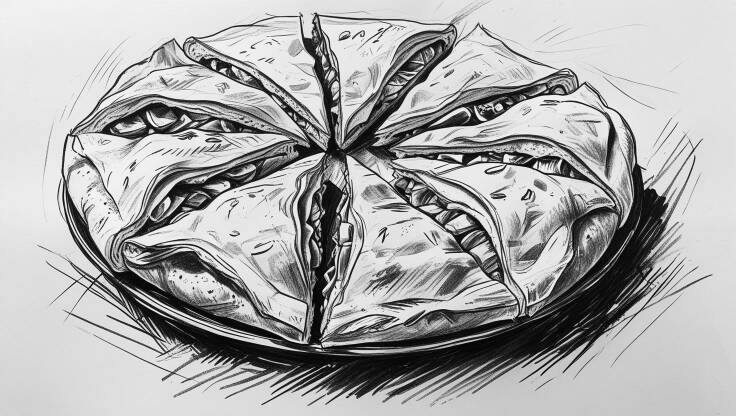
How are you making a K’ot’ori?
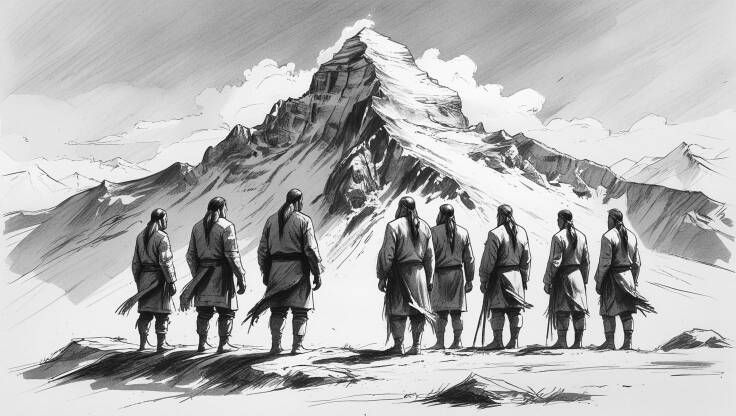
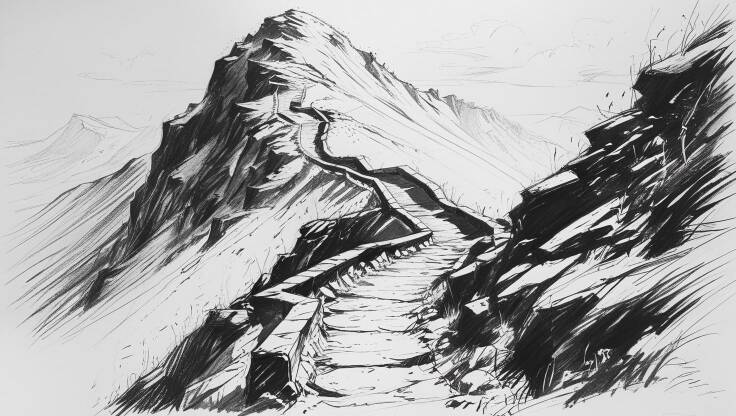
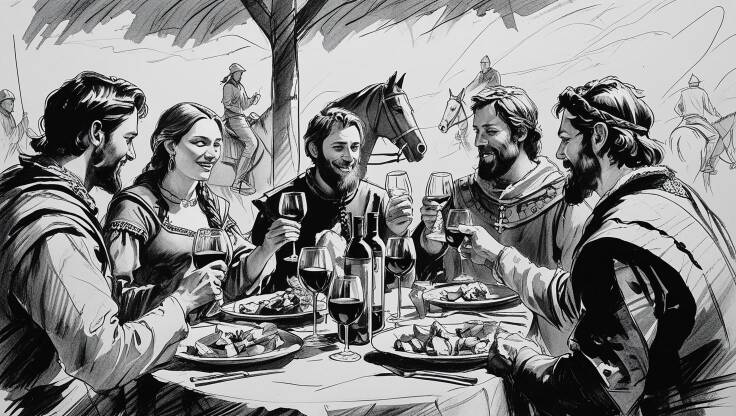
comparison

Tush and Georgian?
syntax
Syntactic annotations of the Tush corpus are based on SUD (=Surface Universal Dependencies), see Kim Gerdes, Bruno Guillaume, Sylvain Kahane, and Guy Perrier. 2018. SUD or Surface-Syntactic Universal Dependencies: An annotation scheme near-isomorphic to UD. In Proceedings of the Second Workshop on Universal Dependencies (UDW 2018), pages 66–74, Brussels, Belgium. Association for Computational Linguistics. The basic properties of our corpus are summarized In the following. For more elaborated discussion, we refer to the SUD website.
You can visit and download the Tush Treebanks in ArboratorGrew (Treebank BBL-SUD). The current version of the Treebanks was created semi-automatically with a parser written in R. The data contains errors that will be manually corrected. Next release scheduled for 1.11.2025.
Part of Speech
Part of speech information was converted to the UPOS categories following UD. The XPOS layer contains the abbreviations used in FLEx and are sometimes more detailed (e.g., they are informative for subclasses of pronouns). The inflectional features (FEATS) are only used for the inflectional categories of nouns and the different verb forms.| UPOS | XPOS | FEATS | form | gloss |
|---|---|---|---|---|
| ADJ | adj | aṭṭã | easy | |
| ADJ | adj | psare-lũ | yesterday-ADJZ | |
| ADJ | ordnum | qa-lğe-č | three.OBL-ORD-OBL | |
| ADJ | quant | meɬ | several | |
| ADP | adp | mak | on | |
| ADV | adv | laxuš | below | |
| ADV | adv | doḳšor-uš | heart.DD-wide-ADVZ | |
| ADV | verbprt | xolme | HAB | |
| DET | det | marã | such | |
| CCONJ | coordconn | je | and | |
| CCONJ | coordconn | le | or | |
| INTJ | interj | ai | look | |
| INTJ | interj | vaime | oh | |
| NOUN | n | Case=Abs|Number=Sing|Gender=BB | com | dough.B |
| NOUN | n | Case=Ins|Number=Sing|Gender=DD | drož-e-v | yeast.D-OBL-INSTR |
| NUM | cardnum | atsi | thousand | |
| NUM | cardnum | barɬ | eight | |
| NUM | cardnum | ši-š | two-DISTR | |
| NUM | ordnum | ši-lğẽ | two-ORD | |
| NUM | multipnum | qo-c̣ | three-MULT | |
| PART | prt | =ḳi | =indeed | |
| PART | prt | ahaɁ | yes | |
| PRON | pers | Case=All|Number=Sing | so-gŏ | 1SG-ALL |
| PRON | dem | Case=Abs|Number=Plur | oqar | DIST.PL |
| PRON | indfpro | Case=Abs|Number=Sing | vum | something |
| PRON | interrog | Case=Abs|Number=Sing | vux | what |
| PRON | recp | Case=Abs|Number=Sing | vašar | each_other |
| PRON | refl | Case=Dat|Number=Sing | šarn | REFL.3SG.DAT |
| PRON | poss | Number=Plur | šuĩ | POSS.REFL.3PL |
| PROPN | nprop | Case=Abs|Number=Sing | agvisṭŏ | August |
| SCONJ | comp | me | SUBORD | |
| SCONJ | subordconn | daxeɁ | before of | |
| VERB | v | VerbForm=Inf | b-iv-ã | BB-sow-INF |
| VERB | v | VerbForm=Fin | b-ix | BB-go.IPFV |
| VERB | v | VerbForm=Vnoun | b-iḳ-ar | BB-take-VN |
| VERB | v | VerbForm=Part | b-iḳ-en | BB-take-PST.PTCP |
| X | X | im | [DISFLUENCY] |
Root
The root of the dependency tree is the finite verb of a clause or – in the absence of a finite verb – the highest head of the annotated unit.
You can view our illustrative annotations by selecting the provided examples. The Viewer is compatible with any CoNLL-U file: you may also upload your own for visualization if you wish.
Modifiers
SOURCE: head, TARGET: modifier
- adjective/quantifier [mod]← noun
- adverbs [mod]← verb
- commitative, instrumental, locative, adverbial cases or ablative, superlative, etc. postpositions [mod]← verb (occasionally also other)
- degree adverb [mod]← adverb or adjective
- subordinators of adverbial clauses [mod]← element in matrix clause
- Genitive noun [udep]← noun
- "possessive pronouns" (=genitive of personal pronouns) [udep]← noun
You can view our illustrative annotations by selecting the provided examples. The Viewer is compatible with any CoNLL-U file: you may also upload your own for visualization if you wish.
Complements
SOURCE: head, TARGET: complement
- absolutive argument [comp:obj]← transitive verb
- infinitival complement [comp:obj]← transitive verb
- nominal complement [comp:obj]← postposition
- highest verb of embedded clause [comp:obj]← subordinating conjunction
- comparative conjunction [comp:obj]← comparative marker (degree head) (see comparative constructions)
- standard of comparison [comp:obj]← comparative conjunction
- reported speech FEATS [Reported=Yes] [comp:obj]← verb of saying (see reported speech)
In our annotation, "obliques" refer to nominal arguments that are selected by certain (classes of) verbs, such as datives/allatives as well as absolutives as goals of motion verbs.
- dative/allative of indirect object [comp:obl]← verb
- experiencer dative [comp:obl]← psych verb
- controller dative [comp:obl]← modal verb
- absolutive of goal of motion [comp:obl]← motion verb
- allative/directional case [comp:obl]← motion verb
- causee dative/allative [comp:obl]← causative verb
- predicative adjective [comp:pred]← copula
Note: The subject is a dependent of the copula, not of the predicative adjective.
You can view our illustrative annotations by selecting the provided examples. The Viewer is compatible with any CoNLL-U file: you may also upload your own for visualization if you wish.
Specifiers
SOURCE: head, TARGET: specifier
Subjects and determiners have separate labels in SUD. Note that subjects (target) are dependents of verbs (source), and determiners (target) are dependents of nouns (source).
- demonstrative [det]← noun (if the demonstrative pronoun is used attributively)
- ergative argument [subj]← transitive verb
- single argument (ergative or absolutive) [subj]← intransitive verb
- infinitive as subject [subj]← transitive/intransitive verb
You can view our illustrative annotations by selecting the provided examples. The Viewer is compatible with any CoNLL-U file: you may also upload your own for visualization if you wish.
Other
- conjunction [cc]← last conjunct
- preceding conjunct [conj:coord]← subsequent conjunct
Note: This implies that the syntactic relation of the coordinated phrase to the head is only annotated at the leftmost conjunct.
- target [conj:appos]← apposition
- false start [conj:dicto]← revised unit
- expression [conj:dicto]← repeated or reformulated unit
- punctuation [punct]← highest element of the preceding punctuation domain
You can view our illustrative annotations by selecting the provided examples. The Viewer is compatible with any CoNLL-U file: you may also upload your own for visualization if you wish.
queries
The Tush corpus is online available in ANNIS that allows for visualizations and queries in multimodal annotations. It comes with a powerful query language (AQL=ANNIS query language) that allows to retrieve complex data patterns in multilayered annotations (Krause, Thomas & Zeldes, Amir 2016: ANNIS3: A new architecture for generic corpus query and visualization. in: Digital Scholarship in the Humanities 2016 (31). http://dsh.oxfordjournals.org/content/31/1/118).
You can access the corpus in the SPW installation at: https://spw.uni-goettingen.de/annis/.
Before the query, you need to select the corpus "BBL-0.1-mp3". You write your query in the query window:
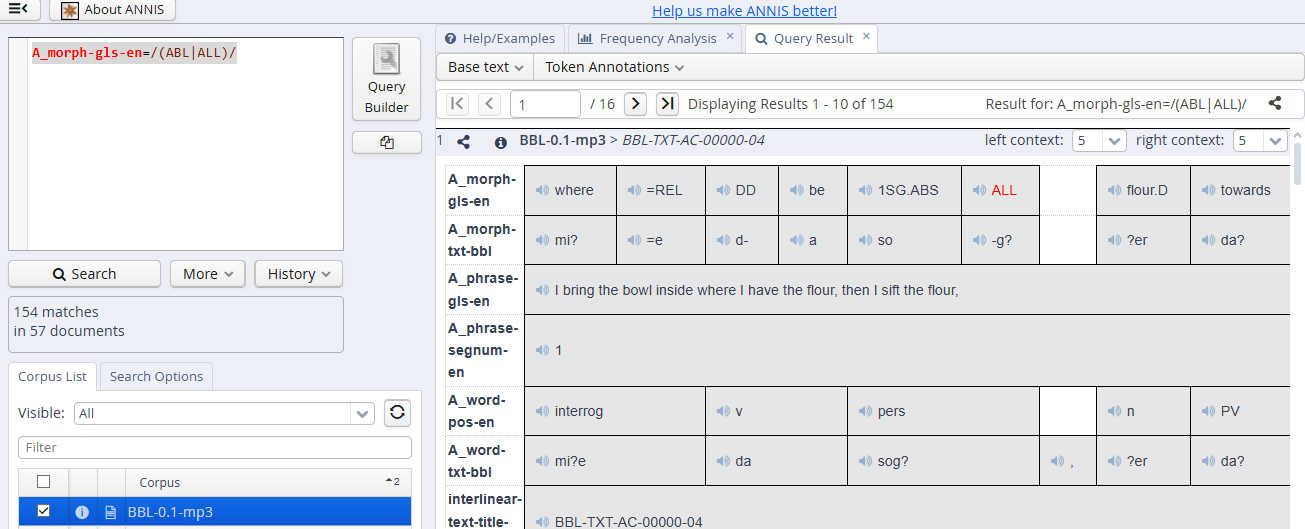
Plain-text queries in AQL
In your queries, you need to specify the annotation layer and define the expression that you are looking for. Notice that the query tool only retrieves sentences that equal the queried expression (and not sentences that contain the queried expression).
| Query | Explanation |
|---|---|
| tok | all tokens of the corpus (not very useful, but illustrative) |
| A_morph-txt-bbl="b-" | all tokens in the form layer (A_morph-txt-bbl) that contain exactly the prefix "b-" (class prefix). |
| A_morph-txt-bbl="-o" | all tokens in the form layer (A_morph-txt-bbl) that contain exactly the suffix "-o" (suffix for oblique stems, etc.). |
| A_morph-txt-bbl="c?ovate" | all tokens in the form layer (A_morph-gls-en) that contain exactly the word "c?ovate" (the valley where the Tush people come from). |
| A_morph-gls-en="Tsovata" | all tokens in the gloss layer (A_morph-gls-en) that contain exactly the word "Tsovata" (the valley where the Tush people come from). |
| A_morph-gls-en="ERG" | all tokens in the gloss layer (A_morph-gls-en) that contain exactly the string "ERG" (ergative case). |
| A_morph-gls-en="1SG.ERG" | all tokens in the gloss layer (A_morph-gls-en) that contain exactly the string "1SG.ERG" (1st person singular ergative). |
| A_word-txt-bbl="badri" | all tokens in the word form layer (A_word-txt-bbl: words without morphemic boundaries) that contain exactly the form "badri" (=children) |
| A_word-pos-en="v" | all tokens in the POS layer (A_word-pos-en) that contain exactly "v" (=verb) |
| A_morph-txt-bbl="-i" _=_ A_morph-gls-en="OBL" | all tokens that contain exactly "-v" in the form layer and exactly "OBL" in the gloss layer - in the same slot (_=_). |
Regular expressions in AQL
Regular expressions are included in slashes. You find some illustrative examples below. More details about the regular expressions in AQL are found here.
| Query | Regular expression | Explanation |
|---|---|---|
| A_morph-gls-en=/B[BD]/ | "[...]" contains alternative characters | all tokens in the gloss layer (A_morph-gls-en) that contain "BB" or "BD". |
| A_morph-gls-en=/(ABL|ALL)/ | "(...|...)" contains alternative strings | all tokens in the gloss layer (A_morph-gls-en) that contain "ABL" or "ALL". |
| A_morph-txt-bbl=/badri?/ | "?" stands for "the last character is optional" | all tokens in the form layer (A_morph-txt-bbl) that contain the string "badri" or "badr". |
| A_morph-gls-en=/B+/ | "+" stands for "at least one occurrence" | all tokens in the gloss layer (A_morph-gls-en) that contain the at least one occurrence of the character "B", which includes "B" and "BB". |
| A_morph-gls-en=/AL*/ | "*" stands for "zero or more occurrences" | all tokens in the gloss layer (A_morph-gls-en) that contain "A", "AL", "ALL", "ALLL", etc. |
| A_morph-gls-en=/.BL/ | "." stands for "whatever character" | all tokens in the gloss layer (A_morph-gls-en) that contain a character (.) and the string "BL", e.g., "ABL", "OBL", etc. |
| A_phrase-gls-en=/.*vanilla.*/ | ".*" stands for "zero or more occurrences of whatever character" | all tokens in the free translation (A_phrase-gls-en) that contain "vanilla"; precisely, repeated characters (.*), the string vanilla, and repeated characters (.*) |
More about AQL: AQL documentation site.
sources
grammars
Chrelashvili, K. (2002). C’ova-Tušuri ena [Tsova-Tush Language]. Tbilisi: Tbilisi State University.
Chrelashvili, K. (2007). Tsova-Tushinskij (Bacbijskij) jazyk. Moscow: Nauka.
Desheriev, J.D. (1953). Batsbijskij jazyk: fonetika, morfologija, sintaksis, leksika. Moskva: Izdatel'stvo Akademii nauk SSSR.
URLHauk, Bryn and Alice C. Harris (2018). Batsbi. To appear in: Y. Koryakov, Y. Lander, and T. Maisak (eds.). The Caucasian Languages: An International Handbook. Berlin/New York: Mouton. URL
Holisky, Dee Ann and Rusudan Gagua (1994). Tsova-Tush (Batsbi). In Rieks Smeets (ed.), North East Caucasian Languages, Part 2, 147-212. Delmar, NY: Delmar, New York: Caravan Books. URL
Sanikidze, L. (2010). Bacburi (Tsova-Tushuri) ena, [Batsbi (Tsova-Tush) Language]. Tbilisi. URL
Schiefner, Anton (1856). Versuch über die Thusch-Sprache: oder, Die khistische Mundart in Thuschetien [Essay on the Tush language: or, the Kist dialect in Tusheti]. Buchdruckerei der Kaiserlichen Akademie der Wissenschaften. URL
Shanidze, A. (1970). The tush. Mnatobi 2, Tbilisi.
morphosyntax
Gagua, Rusudan (1943). dziritadi da erttandebuliani brunvebi bacburshi [simple and compound cases in Batsbi]. PhD thesis, Tbilisi State University.
Gagua, Rusudan (1962). Bacburi zmnis asp'ekt'i da ricxvis gamoxatVis saSualebani [Batsbi verbal aspect and the means of depicting number]. Iberiul-k'avk'asiuri Enatmecniereba 13, 261-66..
Hauk, Bryn (2020). Deixis and Reference Tracking in Tsova-Tush. PhD dissertation, University of Hawai'i at Mānoa. URL
Hauk, Bryn & Bradley Rentz (2019). Tsova-Tush language attitudes and use.. Poster presented at the 6th International Conference on Language Documentation and Conservation, Honolulu, HI. URL
Harris, Alice C. (2009). Exuberant exponence in Batsbi. Nat Lang Linguist Theory 27, 267–303. URL
Harris, Alice (2011). Clitics and affixes in Batsbi. In Rodrigo Gutiérrez Bravo et al. (eds.), Representing Language: Essays in Honor of Judith Aissen. Santa Cruz: University of California, 137-155. URL
Holisky, Ann (1985). A Stone's Throw from Aspect to Number in Tsova-Tush International Journal of American Linguistics 4, 453-455.
Holisky, Ann (1994). Notes on Auxiliary Verbs in Tsova-Tush (Batsbi). In Howard I. Aronson (ed.), Non-Slavic languages of the USSR: Papers from the fourth conference . Ohio: Slavica Publishers, 143-159. URL
Holisky, Ann (1987). The case of the intransitive subject in Tsova-Tush (Batsbi). Lingua . 71, 103-132. URL
Wichers Schreur, Jesse (2021). Nominal borrowings in Tsova-Tush (Nakh-Daghestanian, Georgia) and their gender assignment. In Diana Forker & Lore A. Grenoble (eds.), Language contact in the territory of the former Soviet Union, 15–33. Amsterdam: John Benjamins. URL
Wichers Schreur, Jesse (2025). Intense language contact in the Caucasus: The case of Tsova-Tush. Berlin: Language Science Press. URL
Wichers Schreur, Jesse, Marc Allassonière-Tang, Kate Bellamy, Neike Rochant (2022). Predicting grammatical gender in Nakh languages: Three methods compared. Linguistic Typology at the Crossroads 2-2, 93-126. URL
sounds
Gagua, Rusudan (1956). Zogierti ponet’ikuri p’rocesi batsburi enis xmovnebši. Ibero-Caucasian linguistics, V8.
Imnaishvili D. (1977). 1977, istoriko-sravnitelnij analiz fonetiki naxskix jazikov [historical-comparative analyses of the Nakh languages phonetics]. Tbilisi.
Mikeladze, M. (1977). Xmovanta redukcia bacbur enaši [Reduction of vowels in the Batsbi language]. Macne 3, 118-127.
words
Bertlani, A., Mikeladze, A., K. Gigashvili (2012-2019). Tsovatush-Georgian-Russian-Enligsh dictionary, vol. 1-4. Tbilisi: Saari.
Fähnrich, H. (2001). Batsisch (Zowatuschisch)-Deutsches Wörterbuch. Jena: Friedrich-Schiller Universität.
Kadagidze, D. & N. Kadagidze (1984). C’ova-tušur-kartul-rusuli leksik’oni [Tsova Tush-Georgian-Russian dictionary]. Tbilisi: Mecniereba. Volume 1, Volume 2, Volume 3, Volume 4.
data
Hauk, Bryn (2020). Batsbi (Tsova-Tush) Repository at Scholar Space of the University of Hawaiʻi at Mānoa. URL
Kakashvili, Diana, and Stavros Skopeteas. (2025). Tsova-Tush (Bats/bi) spoken data corpus (1.0.0) [Data set]. Zenodo. (doi: 10.5281/zenodo.15863418) URL
Tsiskarishvili, Tinatin. (2025). Common Voice Scripted Speech 24.0 - Tush URL
relevant events and networks
Léa Nash & Jérémy Pasquereau. (2025-2028). CAUcasian LAnguages across GEorgia (CauLaGe): International Research Network on the languages of Georgia and surrounding regions. CNRS-IRN funded network. URL
Activities:
Kakashvili, Diana, Nicola Lampitelli, Martha McGinnis, Léa Nash, and Jérémy Pasquereau. (2025-...). Zemo Alvani Field Research station. URL
Kakashvili, Diana, Léa Nash, and Jérémy Pasquereau. (2024). CAUcasian LAnguages in GEorgia: Linguistic fieldwork summer program. August 26 to September 1, 2024, Zemo Alvani, Georgia. URL
Kakashvili, Diana, Léa Nash, and Jérémy Pasquereau. (2025). CAUcasian LAnguages in GEorgia: Linguistic fieldwork summer program. August 18 to 31, 2025, Zemo Alvani, Georgia. URL
Öztürk, Balkız, Ömer Demirok, Metin Bağrıaçık. (2026). CauLaGeNet Workshop. May 20-22, 2026, Istanbul. URL